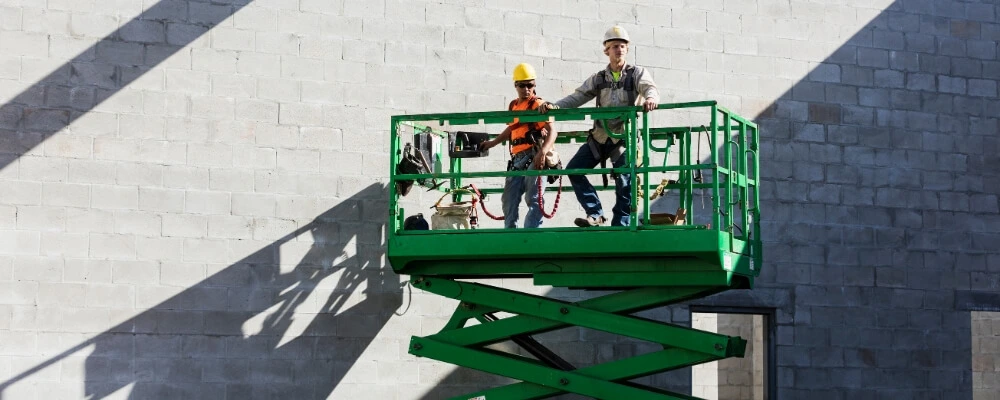
In the world of construction and industrial maintenance, scissor lifts are essential for efficiency. However, because they are so commonly used, it is easy for operators to become complacent. At Hopedwell, we believe that safety is not just a checkbox, it is a culture. Improper use of aerial lifts can lead to serious, often fatal, accidents.
This guide outlines the essential protocols every operator must follow to ensure a safe work environment.
Understanding the Risks: Why Do Accidents Happen?
To prevent accidents, we must first understand their root causes. Data shows that the majority of scissor lift incidents stem from three areas:
- Lack of Fall Protection: Whether it is missing guardrails or operators “climbing” the rails to reach higher, falls remain a leading hazard.
- Unstable Ground: Operating on slopes, soft soil, or debris-strewn floors can lead to a catastrophic tip-over.
- Improper Positioning: Neglecting to check for overhead power lines or failing to cordon off the work area increases the risk of electrocution and ground-level collisions.
The Standards for Fall Protection
Safety starts inside the platform. To maintain a zero-incident workspace, adhere to these three non-negotiables:
- Use Installed Guardrails: Never operate a lift if the guardrail system is incomplete or damaged.
- Stay Inside the Platform: Both feet must remain firmly on the floor.
- Never Stand on Guardrails: If you cannot reach your work area, reposition the lift or use a higher-reaching model. Using the rails as a ladder is a major safety violation.
Proper Positioning and Clearance
Before you hit the “up” switch, perform a 360-degree environment check:
- The 10ft Rule: Always maintain a minimum clearance of 10 feet (3 meters) from overhead power lines to prevent electrical arching.
⚠️ SAFETY MANDATE: In accordance with Malaysian safety best practices and DOSH (JKKP) guidelines, always maintain a minimum ‘Exclusion Zone’ of 10 feet (3 meters) from power lines. For high-voltage pylons, increase this distance significantly and consult with the utility provider (e.g., TNB) before commencing work. - Avoid Overhead Obstructions: Ensure the path above the platform is clear of beams, pipes, or ceiling fixtures.
- Establish a Perimeter: Use safety cones and physical barriers to prevent vehicles or pedestrians from entering the lift’s “crush zone.”
The Essential Scissor Lift Checklist
| THE DO’S | THE DON’TS |
| Follow Load Capacity: Overloading leads to tipping. | Don’t use ladders or boxes to gain extra height. |
| Operate on Level Ground: Only use the lift on firm, flat surfaces. | Don’t override or bypass safety sensors/limit switches. |
| Wear PPE: This includes your safety harness and hard hat. | Don’t operate in windy conditions or extreme weather. |
| Inspect Before Use: Check hydraulics, tires, and controls daily. | Don’t connect chains or heavy cables to the guardrails. |
Elevate Your Safety Standards
At Hopedwell, we are dedicated to providing the training and knowledge necessary to keep your team safe. A split-second decision to follow safety protocols can save a life.
Is your team certified? Don’t wait for an accident to happen. Ensure your operators are fully trained and compliant with the latest safety standards.
[Explore Our Safety Training Courses at Home – Hopedwell Academy]