
Non-Destructive Testing
Hopedwell > Engineering, Construction & Inspection > Non-Destructive Testing
Non-Destructive Testing (NDT) refers to a group of inspection techniques used to evaluate the integrity, properties, and quality of materials, components, or structures without causing damage to the tested item.
NDT methods allow inspectors to detect internal and surface defects, material inconsistencies, corrosion, and structural weaknesses while keeping the component in service. By identifying defects early, NDT helps prevent equipment failures, accidents, and costly downtime.

Dye Penetrant Testing
Dye Penetrant Testing (DPT), also known as Liquid Penetrant Testing (PT), is a non-destructive testing (NDT) method used to detect surface-breaking defects in non-porous materials.
The inspection works by applying a visible or fluorescent liquid dye to the surface of a component. The dye penetrates into surface cracks or discontinuities through capillary action. After removing excess penetrant and applying a developer, the trapped dye is drawn out from defects and forms visible indications that can be evaluated by an inspector.
DPT is widely used because it is simple, cost-effective, and highly sensitive for detecting surface cracks and defects.

Magnetic Particle Inspection (MPI)
Magnetic Particle Inspection (MPI) is a non-destructive testing (NDT) method used to detect surface and near-surface discontinuities in ferromagnetic materials such as carbon steel, low alloy steel, and iron.
The inspection works by magnetizing the test component and applying fine magnetic particles over the surface. If a defect such as a crack or discontinuity exists, the magnetic field will leak from the surface at the defect location, causing the magnetic particles to accumulate and form a visible indication.
MPI is widely used because it is fast, reliable, and highly sensitive to small cracks or defects.

Ultrasonic Testing (UT)
Ultrasonic Testing (UT) is a non-destructive testing (NDT) method used to detect internal flaws and measure material thickness using high-frequency sound waves.
During the inspection, ultrasonic waves are transmitted into the material using a probe. These waves travel through the material and reflect back when they encounter defects, discontinuities, or the back wall of the component. The reflected signals are analyzed to determine the presence, size, and location of defects.

Hardness Testing
Hardness is the mechanical resistance of a material (specimen) to mechanical indentation by another harder body (indenter).
The hardest natural material is the diamond, which is used for the indenter (industrial diamond). The definition of hardness differs from the definition of strength, which is the resistance of a material
to deformation and separation.
Hardness Testing is a material testing method used to determine the resistance of a material to deformation, indentation, or penetration. The hardness value provides an indication of the material’s strength, wear resistance, and heat treatment condition.
Hardness testing is commonly used to verify whether a material meets the required engineering specifications, material standards, or manufacturing requirements.

Metallography Replica
Metallographic Replica Testing is a specialized insitu non-destructive evaluation technique used to examine the microstructure of metallic materials without removing samples from the component.
The method involves preparing the surface of the metal, taking a replica impression of the microstructure, and then analyzing the replica under a microscope. This technique allows engineers to assess material degradation, creep damage, grain structure, phase transformation, and metallurgical conditions of components that have been exposed to high temperature or long-term service.
Metallographic replication is commonly used for life assessment and integrity evaluation of critical equipment in power plants, petrochemical facilities, and industrial installations.
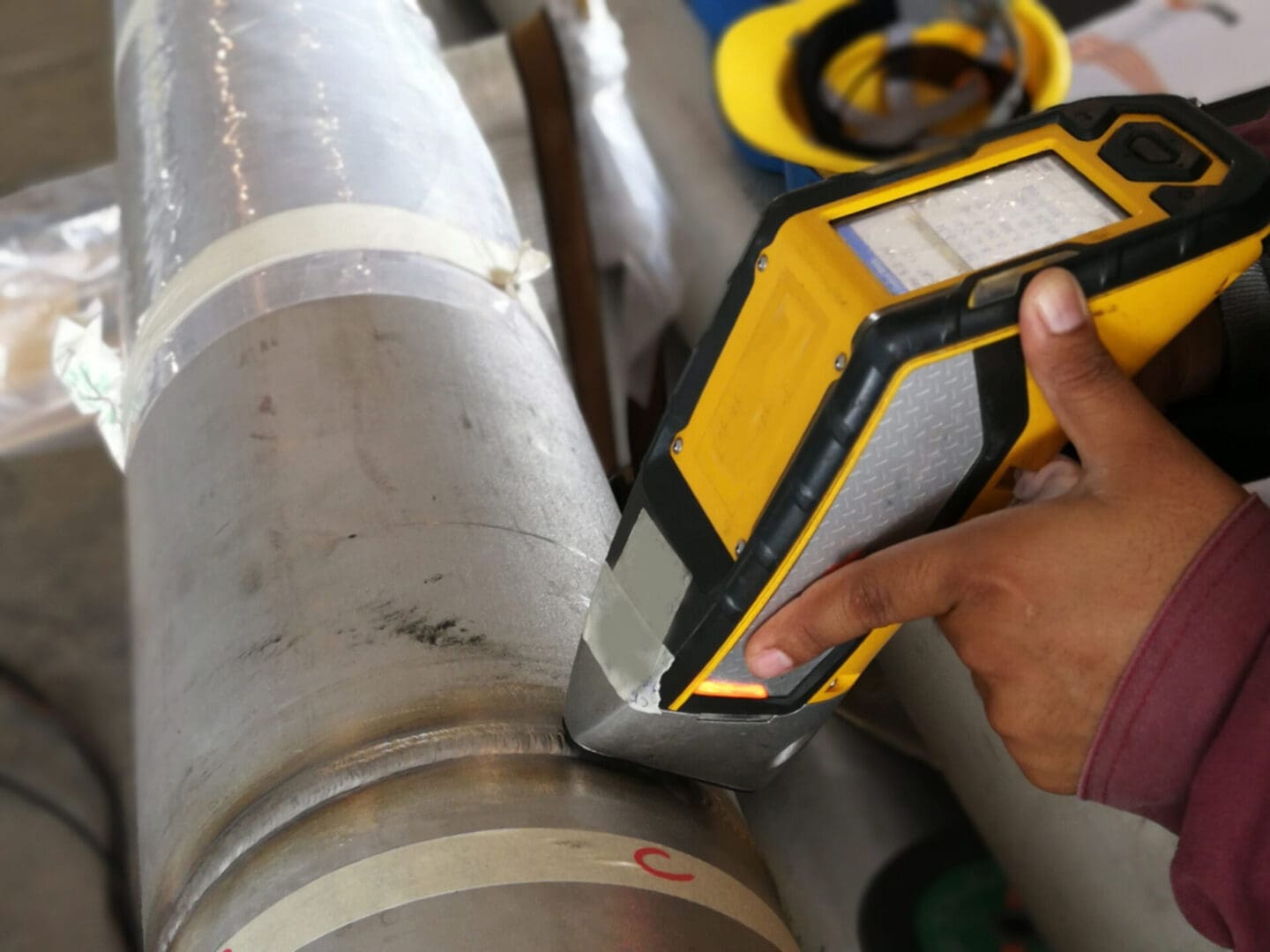
Positive Material Identification
Positive Material Identification (PMI) is a non-destructive testing (NDT) technique used to verify the chemical composition of metallic materials. The test confirms whether the material grade corresponds to the specified alloy or standard required for the application.
PMI is commonly used to ensure that the correct material has been installed in critical systems such as pressure vessels, pipelines, structural components, lifting equipment, and industrial machinery.
Interested in our services? Click the button below to request a quotation.