In any fast-paced warehouse or manufacturing plant, forklifts are indispensable. They keep supply chains moving and handle loads that would be impossible for human hands. However, their sheer familiarity breeds a hidden danger: complacency.
While every operator knows to watch out for speeding in the aisles or obvious pedestrian traffic, major accidents are frequently caused by quiet, subtle hazards. Understanding these “invisible” risks is the difference between a smooth shift and a catastrophic workplace incident.
Here are the top 5 overlooked hazards in forklift operations and how to mitigate them.
1. The Optical Illusion of the “Blind Spot” (Mast & Load Obstruction)
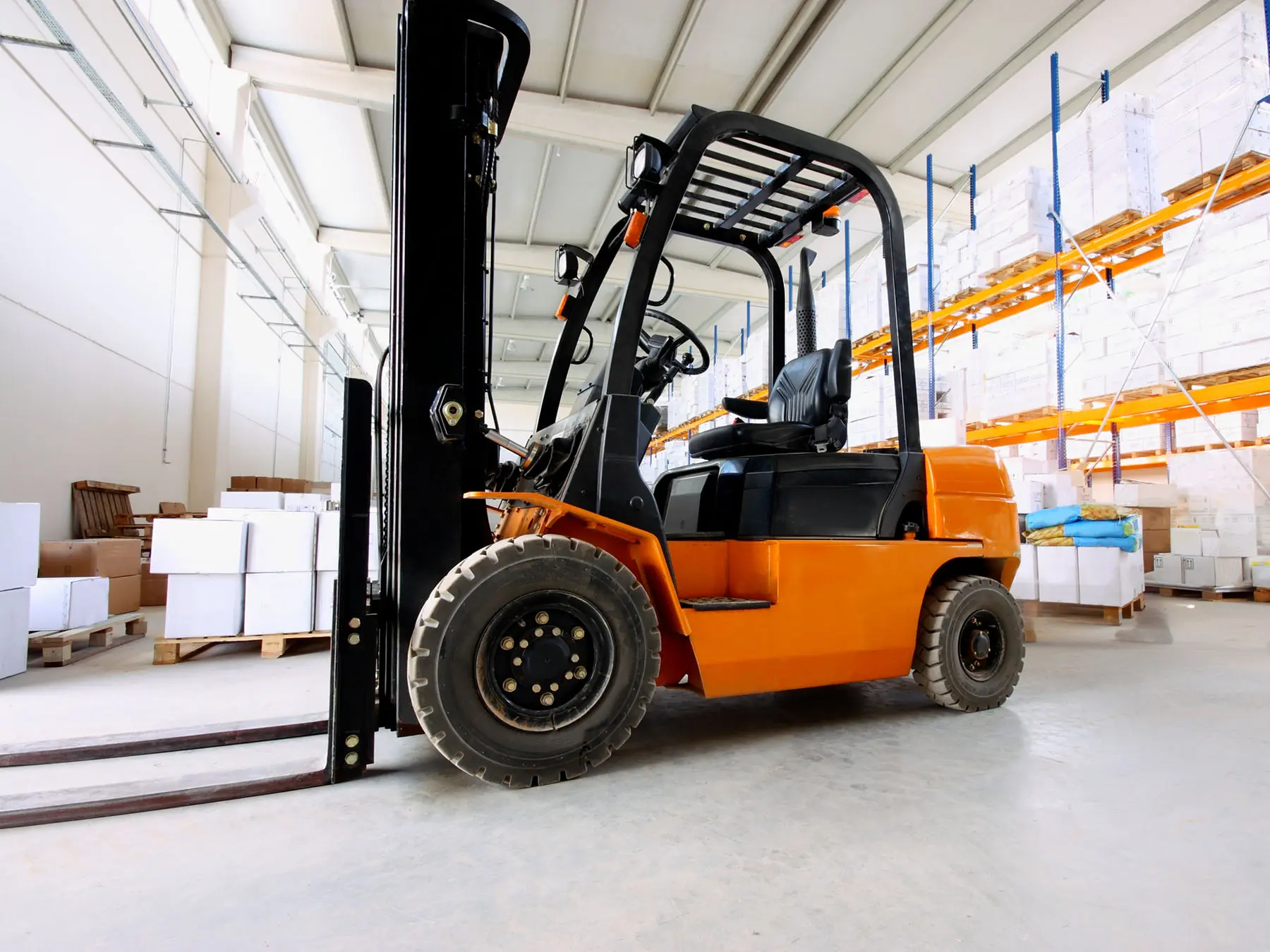
It seems obvious that a large load blocks forward vision. What operators often overlook is the mast obstruction, the metal framework of the forklift itself. Even without a load, the vertical pillars and hydraulic cylinders create shifting blind spots as the forklift moves.
The Invisible Risk: An operator looking forward might completely miss a pedestrian stepping out from an aisle because the pedestrian remains perfectly hidden behind the mast structure during the forklift’s approach.
The Safety Fix: If a load blocks your view, travel in reverse. When moving forward, operators must actively scan by shifting their head side-to-side rather than staring fixedly through the center of the mast.
2. The Mechanics of the “Rear-End Swing”
Automobiles steer from the front, but forklifts steer from the rear. This design allows for incredibly tight turns in narrow warehouse aisles, but it also creates a massive lateral force at the back of the vehicle.
The Invisible Risk: When a forklift turns sharp right, the rear counterweight swings violently to the left. Operators focused entirely on placing a load in front often forget about this rear swing, leading to crushed racking, struck pedestrians, or structural damage.
The Safety Fix: Maintain a safety clearance zone of at least 1 meter between the rear of the forklift and any nearby personnel or structures before initiating a turn.
3. Dynamic Center of Gravity (The Stability Triangle)
Unlike a car on four wheels, a forklift rests on a three-point suspension system known as the Stability Triangle (formed by the front two wheels and the center of the rear axle). As long as the combined center of gravity of the forklift and the load stays inside this triangle, the truck remains upright.
The Invisible Risk: The center of gravity is not fixed; it shifts dynamically. Tipping a load forward while elevated, braking hard while carrying a load, or turning on a slight incline can instantly push the center of gravity outside the triangle, causing a rollover.
The Safety Fix: Never travel with a load elevated. Keep the forks low, about 4 to 6 inches off the ground, and tilted backward slightly to stabilize the weight while in motion.
4. Floor Surface Variables (The Micro-Hazards)
A warehouse floor might look completely flat and safe, but to a forklift carrying several tons, minor surface changes are amplified.
The Invisible Risk: A tiny patch of spilled stretch-wrap plastic, a wood splinter from a pallet, a drop of forklift hydraulic fluid, or a transition over an expansion joint can cause a tire to slip or a load to jolt unexpectedly. Because forklifts have no conventional suspension systems, even a minor bump travels directly to the load.
The Safety Fix: Implement a strict “clean floor” policy. Operators should actively scan the floor 3 to 5 meters ahead of their path for debris, moisture, or uneven transitions.
5. Battery & Fuel Station Hazards (The Silent Vapors)
The dangers of forklift operations do not end when the engine turns off. The charging bay (for electric forklifts) and refueling stations (for LPG or diesel models) present chemical hazards that are frequently ignored.
The Invisible Risk: Charging lead-acid forklift batteries releases highly flammable hydrogen gas, which can accumulate near ceilings. Similarly, small LPG leaks can pool in low areas. These invisible gases require only a tiny spark to ignite.
The Safety Fix: Ensure charging areas are heavily ventilated and completely clear of any spark-producing tools. Operators must wear full PPE (apron, face shield, and chemical gloves) when handling battery acids or changing LPG tanks.
Pro-Tip for Warehouse Managers
Compliance is not just about checking a box; it is about building a proactive safety culture. Regular, hands-on competence training and routine machinery integrity inspections are your strongest lines of defense against workplace liabilities.
Certify Your Operators with Hopedwell Training Academy
Recognizing these invisible hazards requires formal, structured training. At Hopedwell Training Academy, we provide a comprehensive Safe Handling of Forklift Training program designed to equip your operators with the vital technical knowledge, risk awareness, and hands-on skills needed to prevent costly workplace accidents.
From understanding the physics of the stability triangle to mastering safe maneuverability in tight warehouse aisles, our certified trainers ensure your team meets full regulatory standards.
In addition to workforce training, Hopedwell Sdn Bhd supports your operations with independent machinery inspections and safety assessments to keep your equipment in peak, compliant condition